If any of you happened to be at the 11:15 Sunday Mass a few weeks ago, you will know that I got a little teary-eyed during the Mass. This happened after the homily when I called Sister Ann of the Franciscan Missionaries up so that we could say good-bye to her as she was preparing to depart Toronto and return to her community’s motherhouse in Montreal. She will be going to live in the community’s convalescence wing. At eighty-four years of age, Sister Ann spoke to me openly about the fact that she was going to face the final part of her journey on earth. Sister Ann had been a member of this parish community since 1969 and had worked very closely with some of the poor in our parish. Now the reason I got teary-eyed when I called her forward is not because she has been a friend of mine for many years. In fact, I have only known her for the little more than four months that I have been pastor here. In the short time that I have known her, I have really only spoken to her a few times. What made me teary-eyed was the beautiful donation that she made to the parish’s Winter Welcome Table as she was departing. Sister Ann had received a few gifts before her departure from Toronto. Although she herself has very little as an individual, she came to see me before she left and said that she wanted to donate the gifts that she had received as going away presents to the parish’s Winter Welcome Table because she wanted to feed the poor. Her generosity and care for the poor moved me greatly. Her simple and beautiful gesture was a powerful statement about her mission as a Franciscan Missionary and the call to care for the poor that is at the heart of her community’s charism. Her generosity reminded me very much of that generosity that is shown by the poor widow in today’s Gospel as she gives from the little that she has to care for the Temple. Continue reading
Category Archives: A Message from the Pastor
“Jesus Christ is the Face of the Father’s Mercy.” The Year of Mercy— Part Two
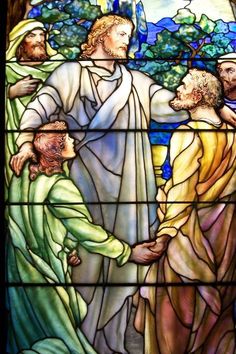
A blind man sat at the side of the road begging. How many people must have passed him by without paying any attention to him? He hears that Jesus of Nazareth will be passing by and begins to yell and hopes to get His attention. “Be quiet” the people who are well tell him. Again he is dismissed by everyone. Children hate it when other children ignore them even for a minute. They like to punish one another by ignoring the other. This man in need has been ignored his entire life. However, Jesus hears his call for mercy and notices him. Jesus asks that the man be brought to Him. As soon as Jesus pays attention to the man, this person’s value is completely changed in the mind of the crowd. Now people begin to console him and tell him to have courage. As Jesus recognizes the blind man’s value, so too does the crowd see his value and they begin to treat him differently. This man is changed by the fact that Jesus looks upon him. The opinion of the world about this man changes because Jesus looks at him. The blind beggar becomes important and has his dignity restored. He leaves the roadside and begins to follow Jesus because the Savior has looked upon him with mercy and changes who he is. Jesus is the face of the Father’s mercy and when he looks upon us we are changed. God’s mercy calls the blind man to become a follower. He takes up his name and follows Jesus and he will be forever known by all who read the scriptures as Bartimeaus. Continue reading
“Jesus Christ is the Face of the Father’s Mercy.” The Year of Mercy— Part One
“Jesus Christ is the face of the Father’s Mercy.”
This seems like the best line to summarize the contents of this Sunday’s readings. In the first reading from the Book of the Prophet Isaiah, we hear how the suffering servant will suffer so that many may be free and know salvation as a result of the suffering servant taking their iniquity upon himself. The Psalm response asks that the Lord might let his mercy be upon us as “we place our trust in Him. In the second reading from the Letter to the Hebrews, we are reminded that Jesus came among us to become our great high priest in order that we all might come before His throne of grace to receive mercy and to find grace and timely help. In the Gospel passage Jesus dismisses His disciples’ concerns about who will be the greatest and tells them that He has come not to be great but to serve and to give His life as a ransom for many. His is a message of mercy. Yes, these readings can best be summed up with the simple line: “Jesus Christ is the face of the Father’s mercy.” Continue reading
God is Love— Creation Proclaims His Love for All!
Everything about our Catholic faith derives from one simple fact about God that God has revealed to us in every aspect of His self-communication with humanity. This can be summed up in the proclamation: God is love. Continue reading
Why Did Jesus Come to Be With Us?
One of the truly amazing and humbling things about being a priest is the types of different intimate and sacred moments that people will invite a priest to be a part of because through the Sacraments the priest makes Christ present at some of life’s most important times. Perhaps the most significant time that a priest can be asked to be a part of a person’s life is at their bedside when they are sick or dying. Often, with an individual’s closest loved ones, a priest is among the last people that a sick individual will deal with as part of their earthly pilgrimage. In these moments a priest helps to make Christ present here on earth to one who is about to be present with God face to face for all eternity. Continue reading
A World Made Deaf and Mute by Original Sin
“The Lord Jesus made the deaf hear and the mute speak, may he soon touch your ears to receive His Word and your mouth to proclaim His faith, to the praise and glory of God the Father.”
This is the beautiful prayer that is said after a child is baptized as part of the explanatory rites— those rites that take place after the actual baptism and that are intended to explain what God’s grace has accomplished in the individual who was baptized. It is part of a ritual that is called the “Ephphatha” and during which the celebrant of the sacrament of Baptism touches the ears and the mouth of the young person who has been baptized. The rite takes its name from the word that Jesus uses in today’s Gospel reading when he cures the deaf and the mute man. As he touches the ears and mouth of the deaf and mute man, he says “Ephphatha,” which in Aramaic means “be open.” In today’s Gospel, after Jesus has touched the man’s ears and mouth, the man is cured and he and others begin to proclaim the marvellous works of God, saying: “He has done everything well, he even makes the deaf hear and the mute speak.”
The Incredible and Magnificently Loving Challenge of the Body and Blood of Christ
“Whoever eats my flesh and drinks my blood abides in me, and I in them” (John 6:56).
It is hard to think of a verse from scripture which sums up in a more precise way the entire challenge of the Catholic faith more profoundly than this passage from John. In it, Jesus invites us to believe that He has loved each one of us so much, that not only has He come into the world to show us His love, but He also wishes to give us His Body and Blood in order that we might know that His love for us is unconditional and constant. Continue reading
The Transforming Power of the Eucharist
In our technological society, it is not uncommon to try to measure the power and strength of all the products that are offered to us. We speak of the number of horsepower that an engine can produce, the strength of our computers and the new and improved extra-strength products that are offered in the stores. Each new line of product that comes out is expected to be capable of producing more and being more powerful. This desire for stronger and better always keeps us longing for the next and newest product to come out.
Strangely, one of the powers that can not be measured and yet is one of the most powerful forces in the world is the power of love. Love is so powerful that it can change things that no technology or political authority can ever change. Love has the power to change a heart and motivate a person to do unheard of acts of generosity and kindness. For the sake of love, some people would be willing to sacrifice their lives, as in the case of a parent for a child or a husband or wife for their loved one. The most selfish individual can become a completely different person if he or she has an experience of love. This is seen easily enough if you think of the selfish young man or woman who is willing to give up everything once he or she falls in love. The same can be said for a couple that lives their life for the moment. Once a child comes into their lives, their entire world can be placed upside down and they can re-order all of the priorities of their lives.
A Vision for Parish within the Archdiocese of Toronto
The human hand is an amazing thing. It is made up of 27 bones and can perform incredible tasks. It is a marvel that human engineering can barely imitate. The same can be said for the foot, a similarly complex organism. If we turn our attention to some of the more complex organs in the body, like the brain or the eye, their awesome capabilities become even more profound. And yet, as amazing as these parts are, there remains one fact that is indisputable— separated from the body they become useless and loose their ability to function. Even when attached to the body, if they do not work in harmony with it, they can actually become a liability to the well-being of the body. If a part of the body becomes infected or no longer works in harmony with the whole, it can weigh the body down or actually turn against the body. This is the reason that often the best way to deal with an infected or cancerous organ is to amputate or remove it before it does harm to the whole.
In his First letter to the Corinthians, St. Paul writes beautifully about this phenomenon of the different parts of the body and the importance of their functioning together in order for any of them to have value. He does so in order to speak of the Church and the importance of the different members of the Church working together to build up the one Body of Christ. In chapter 12, verse 12 to 27, Paul writes: Continue reading
St. Peter’s Parish and the Paulist Legacy
As I am sure many of you know better than I do, the Paulist Fathers ,who served this parish for more than one hundred years, were founded in 1858 by Father Isaac Hecker. Father Hecker was a convert to the Catholic Faith and was not baptized until he was 25 years old. He was first ordained a priest as a member of the Redemptorist Missionary Priests, but later founded the Paulist Fathers with the particular mission of bringing the Good News to those who had not yet heard it. Most of the priests who joined this new community were men who had converted from other Protestant denominations. The Paulist Fathers were the first religious order that was founded in the United States and one of their community’s main charisms was to attempt to bring the Catholic Faith to the mainly Protestant population of the United States of America in a way that was both exciting and new by using new methods of communication and focusing their preaching on the Bible. After the Second Vatican Council, which took place in the early 1960’s, the mission of the Paulist Fathers centred more specifically on evangelizing all people and using the modern methods of communication to do so. The Paulist Fathers came to Toronto in 1914 at the invitation of Archbishop Neil MacNeil and began their work here at St. Peter’s Parish and at the Paulist Centre. Other then their parish in Rome, this parish was their only house outside of the United States. Continue reading